Why Energy Efficiency Has Become a Priority
Energy efficiency is no longer a nice-to-have feature but a requirement of modern properties. Why? Since heating systems are among the largest energy users in any home, particularly in climates where the weather varies and systems are always turned on and off.
When efficiency drops, it doesn’t always fail dramatically. More frequently, it passes silently: extended heating periods, unequal indoor temperatures, and increased utility bills. The U.S. Energy Information Administration estimates that space heating can consume almost 40% of the total home energy consumption during colder seasons. It implies that even minor inefficiencies become apparent costs very soon.
Proper System Design
Many homeowners believe that the solution to heating issues is to upgrade equipment. As a matter of fact, the quality of installation is as significant as the system itself. When the unit is either too large or too small or improperly set up, then efficiency is compromised regardless of the level of technology.
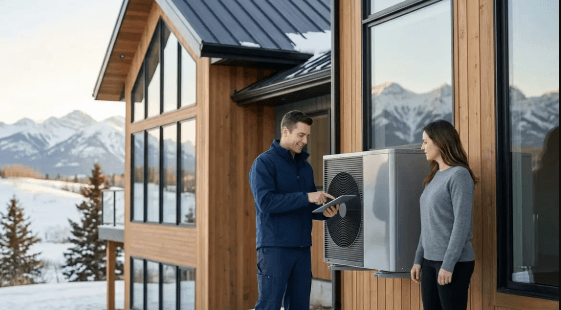
This is the reason why it is necessary to plan before making any changes. Collaboration with experts in the field of HVAC installation in Palo Alto, CA, can be used to make sure that the system is tailored to the layout of the property, the level of insulation, and the structure of airflow. Correct load calculations and duct analysis avoid typical problems such as short cycling or uneven heat distribution. Ever noticed one room that feels perfect while another stays cold no matter what? It is typically a design or installation imbalance, not old equipment.
Energy-Saving Modern Heating Technologies
The modern heating systems are much more adaptive as compared to the older ones. Modern units do not operate at a fixed output but change in real time depending on demand. Variable-speed motors, high-efficiency furnaces, and hybrid heat pumps all help to make the performance smoother and less spiky in energy consumption.
What does that imply to you in practice? Reduced temperature fluctuations, less noise, and reduced monthly payments. According to the U.S. Department of Energy, the conversion to a high-efficiency system can save 20-40% of heating energy, depending on the conditions in the home and the patterns of its use. That is a significant savings in a complete heating season.
Smart thermostats are also significant. They are taught how to use, auto-adjust, and prevent unnecessary heating when no one is at home. It is a little gadget, but it alters the behavior of the whole system.
See also: Enhance Your Home Experience: Creative Ideas for the MRX-15
System Integration and Real Performance Gains
Even the best heating unit can’t perform properly if the rest of the system is outdated or inefficient. Energy loss due to duct leaks, inadequate insulation, and unbalanced airflow is common and is confused by homeowners with “weak heating”. As a matter of fact, the system is straining more than it ought to simply to compensate.
That is where integrated solutions come in. Companies such as Air & Plumbing Systems are concerned with the entire infrastructure- not only the heating unit. This involves the efficiency of ventilation, plumbing interactions in hybrid systems, and optimization of airflow throughout the property. When all is in harmony, the system does not struggle with itself. It functions as a synchronized network, which minimizes strain and enhances long-term reliability.
This holistic method also aids in detecting the inefficiencies that are not obvious at the beginning before they become costly repairs or complete system overhauls.
Thinking Long-Term on Heating Efficiency
Energy-efficient heating does not only mean updating equipment but making the whole system smarter. When your house takes too long to heat up, when some of the rooms never feel comfortable, or when your energy bills continue to increase without any apparent reason, these are some of the indicators to listen to.
The positive aspect is that the contemporary solutions are more adaptable and efficient than ever. Through appropriate system design, high technology, and complete property integration, you can greatly enhance comfort and minimize energy waste. And that balance is what makes a well-optimized heating system in the long run.