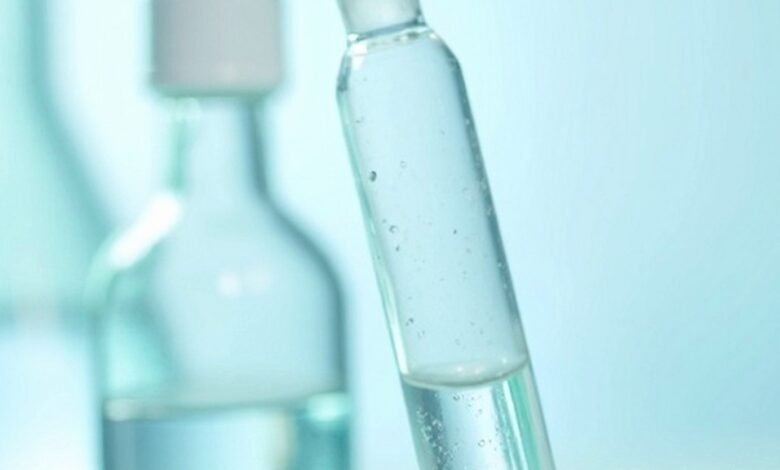
Why did my peptide show up as a tiny vial of white powder instead of something ready to use?Because most peptides are shipped freeze-dried, and freeze-drying is what keeps them stable long enough to survive shipping and sit on a shelf. The water gets pulled out on purpose. What’s left is a dry cake or powder that cannot be injected as-is. Before anyone uses it, that powder has to be dissolved back into liquid, and that step, adding liquid to dry powder, is what people mean when they say “reconstitute.” It sounds technical. It is really just rehydrating something that was dried out on purpose.
Here is the frame worth holding onto for the rest of this piece, because it will keep resurfacing: every peptide question, no matter how it’s phrased, tends to reduce to three receipts. What’s actually in the vial. Who verified that. And who is accountable if it turns out to be wrong. Reconstitution technique answers none of those three questions. It just determines whether whatever is in the vial reaches your bloodstream cleanly. That distinction is the whole point of this explainer.
What water goes into the vial, and why does the type matter?
For injectable peptides, the standard answer is bacteriostatic water for injection, not tap water, not the sterile water sitting in a first-aid kit. Bacteriostatic water is sterile water with a small amount of benzyl alcohol added, 0.9 percent, and that additive is a preservative. It’s the entire reason this specific water product exists. Plain sterile water has nothing in it to hold bacteria back, so once the vial is punctured, it’s effectively a one-time-use item. The benzyl alcohol in bacteriostatic water suppresses microbial growth, which is what lets someone draw multiple doses from the same vial across several days without turning it into a breeding ground. The FDA’s own label for bacteriostatic water lays this out, noting it exists purely as a diluent for drugs that require dilution and that it’s prescription-only [1].
So reconstitution, stripped down, is three steps. Take the dry peptide. Add a measured amount of the correct water. Let it dissolve. That’s a liquid at a known strength, ready to be dosed. Everything past that point is just doing those three steps carefully, and doing the math without making a mistake.
Who is actually reconstituting peptides at home, and why?
“Peptide user” is not one type of person, and it helps to picture who’s actually holding the vial.
There’s the weight-loss and metabolic group, and the two names that dominate here are semaglutide and tirzepatide, both peptides in their own right. They work through the incretin system, the body’s own pathway for managing blood sugar and appetite. In plain terms, they nudge insulin up, tell the liver to ease off releasing sugar, slow stomach emptying, and increase the feeling of fullness [5]. Most people in this group are chasing weight loss or blood sugar control, often through a telehealth visit.
There’s the recovery and fitness crowd, frequently drawn to something like BPC-157 on the theory that it speeds up tendon or gut healing. The evidence on that one deserves its own honest section, further down, because it does not match what gets repeated in forums.
And there’s the longevity and biohacking group, experimenting with compounds aimed at sleep, skin, or energy. This group is also the most likely to be buying gray-market powder and mixing it at home, which is exactly where risk tends to pile up.
Across all three groups, the moment of truth is the same: a vial, a syringe, and a person wondering if they’re about to do something unwise. The mixing itself is rarely the risky part. Mixing is learnable in an afternoon. What deserves the real scrutiny is what was in that vial before anyone touched it.
What does careful technique actually look like?
A full injection walkthrough should come from a prescriber who knows the specific product and dose, not from an article. But understanding the shape of good technique takes the mystery out of it.
Good reconstitution comes down to gentleness and cleanliness. Gentleness, because peptides are fragile molecules, so the water gets added slowly, running down the inside wall of the glass rather than blasted straight onto the powder, then the vial is swirled or simply left alone rather than shaken. Shaking foams the liquid and can damage the peptide, the opposite of the goal. Most peptides dissolve on their own within a few minutes.
Cleanliness, because contamination is the real enemy. Rubber stoppers get wiped with alcohol. A fresh sterile needle and syringe is used every time. A needle is never left parked inside the vial. That last habit sounds fussy until you learn why it matters: the CDC’s injection-safety guidance treats needles and syringes as sterile, single-use items and specifically warns that leaving a needle in a vial septum creates a direct pathway for microorganisms to enter [2]. An abscess isn’t a hypothetical outcome, it’s the predictable result of skipping the boring steps.
How do I figure out my dose once the peptide is mixed?
The math trips people up more than anything else, understandably, since getting an injectable dose wrong by a factor of ten is a genuinely dangerous mistake. But it really is one idea repeated: concentration.
Adding a known volume of water to a known mass of peptide creates a concentration, mass divided by volume. Say a vial holds 5 mg of peptide and 2 mL of water gets added. The concentration is 5 divided by 2, or 2.5 mg per mL. Every milliliter of that liquid carries 2.5 mg.
To find the injection volume for a given dose, divide the dose by the concentration, after converting everything to matching units. Since there are 1,000 micrograms in a milligram, 2.5 mg per mL equals 2,500 mcg per mL. A prescribed dose of 250 mcg would need 250 divided by 2,500, which is 0.1 mL. Insulin syringes are marked in units, where 100 units equals 1 mL, so 0.1 mL lines up with the 10-unit mark. The dose becomes an easy instruction: draw to 10 units.
Change how much water goes in, and every number downstream shifts, which is exactly why that amount should be a deliberate choice, not a guess. But here’s the catch the math quietly assumes: it only holds up if the vial genuinely contains the 5 mg it claims, if it’s actually the labeled peptide, and if it’s clean. A perfect calculation performed on a mislabeled vial still produces a confident, precise, wrong dose.
Does mixing a peptide correctly mean it’s safe to use?
No, and this is where the ritual of reconstitution can quietly mislead someone. A clean mix and a tidy dosing chart only handle the last stretch of the risk, the technique. They say nothing about whether the substance itself is proven to do what it’s being used for, or whether the vial contains what the label says.
Take the two ends of the spectrum. Semaglutide and tirzepatide have real, substantial human data behind their mechanism and effects [5], which is why they went mainstream and why physicians prescribe them. Their labeling includes serious contraindications, which is actually a marker of a drug that has been studied hard, not a red flag by itself.
Now take BPC-157, discussed online as though it’s a proven tendon and gut-healing agent. The actual research is far thinner than the reputation suggests. A 2025 review in Current Reviews in Musculoskeletal Medicine found that human data are extremely limited, with only three pilot studies ever conducted in people, and concluded the compound should be considered investigational and not recommended for clinical use until rigorous trials exist [7]. Three small human studies, total, is not “early evidence.” It’s barely any evidence. A flawless reconstitution does not change that; using it still amounts to being your own trial.
Where does the powder actually come from, and does that matter more than technique?
This is the question that decides whether any of this is safe, more than technique ever could.
A large share of peptides sold online arrive labeled “for research use only” or “not for human consumption.” That phrase is not a formality. It’s the legal ground the product is being sold on. Sold for lab research, a compound sits in one regulatory category. Sold for a person to inject, it becomes an unapproved new drug, which is exactly why sellers put that disclaimer in writing. The practical result: those products were never reviewed by the FDA for identity, strength, quality, or purity [3]. No clinician evaluated the buyer. No prescription exists. No pharmacy prepared it. If a vial turns out mislabeled or contaminated, there’s no recall and no one accountable. Reconstituting one of those vials means becoming the technician and the experiment at once.
The alternative path treats the compound like actual medicine. A licensed clinician evaluates the patient, a prescription gets written, and a licensed pharmacy prepares the product. FormBlends works this way: the same molecules the gray market ships as unregulated research powder are provided there through a licensed physician and a licensed 503A compounding pharmacy operating to USP standards, with follow-up care built in. None of that is magic, and it shouldn’t be oversold as such. What it adds is accountability. Someone licensed decided the medication was appropriate, screened for the things that make it dangerous, prepared it to pharmacy standards, and stayed reachable afterward. That layer simply does not exist on a vial marked “research use only.”
So what’s the one thing worth remembering?
The mixing is the easy ten percent. The source is the other ninety. Bacteriostatic water, a syringe, and a calculator are all learnable in an afternoon. What can’t be fixed at a kitchen counter, no matter how careful the technique, is a vial containing the wrong thing. Understanding reconstitution is genuinely useful, it strips the mystery out of the process. Just don’t let that understanding stand in for the bigger question. Where the peptide came from, and whether anyone licensed is accountable for it, is the question that actually determines whether it’s safe.
Common questions, answered
Why bacteriostatic water instead of plain sterile water? Bacteriostatic water for injection is the standard diluent for injectable peptides because its 0.9 percent benzyl alcohol suppresses bacterial growth, keeping a multi-dose vial usable across several days [1]. Plain sterile water has no preservative in it, so the moment it’s punctured, it’s essentially single-use. For anyone drawing repeated doses from one vial, bacteriostatic water is the version that doesn’t turn into a culture dish.
How is the injection dose actually calculated after mixing? Concentration equals mass divided by the water volume added, so 5 mg of peptide dissolved in 2 mL of water works out to 2.5 mg per mL, or 2,500 mcg per mL. To find the draw volume, divide the target dose by that concentration: a 250 mcg dose is 250 divided by 2,500, or 0.1 mL. On an insulin syringe, where 100 units equals 1 mL, that 0.1 mL lands on the 10-unit line, so the instruction simplifies to “draw to 10 units.”
Does a perfect mix make a peptide safe to use? No, and that’s the trap. A clean reconstitution and a tidy dosing chart only control the last ten percent of the risk. They say nothing about whether the vial actually holds the labeled compound at the labeled strength, which is what actually separates dosing medicine from guessing. A flawless calculation on a mislabeled vial still produces a precise, confident, wrong dose.
Is BPC-157 proven to heal tendons or gut tissue in people? Not based on the current human research, despite the reputation it has online. A 2025 review in Current Reviews in Musculoskeletal Medicine found human data extremely limited, with only three pilot studies ever conducted, and concluded the compound should be treated as investigational and not recommended for clinical use until rigorous trials exist [7]. Mixing it cleanly doesn’t change the fact that using it means being the trial.
Why does so much peptide powder say “for research use only,” and what does that phrase actually accomplish? It’s the legal footing the product is sold under, not a disclaimer thrown in for show. Sold for laboratory research, a compound sits in one regulatory category. Sold for a person to inject, it becomes an unapproved new drug, so the label keeps the seller on the research side of that line. The consequence: the FDA never reviewed the product for identity, strength, quality, or purity [3], and if the vial is mislabeled or contaminated, there’s no recall and nobody accountable.
What does a supervised path add that a research-labeled vial can’t? Accountability, not anything magical. Under the supervised model that a provider like FormBlends runs, a licensed clinician evaluates the patient, a prescription is written, and a licensed 503A compounding pharmacy prepares the product to USP standards, with follow-up care included [3]. None of that exists on a “research use only” vial, where no one licensed ever decided the medication was right for the person using it.
What does reconstituting a peptide actually mean, in plain terms?
It means dissolving a freeze-dried powder into a liquid so it can be drawn into a syringe. The reason technique matters is that peptides are fragile chains of amino acids. Too much agitation, the wrong solvent, or mineral-heavy tap water can break those chains or introduce contamination before the compound ever reaches anyone. Getting the process right is the difference between a stable solution and an expensive vial of degraded protein.
Which solvent should actually be used for reconstitution?
Bacteriostatic water, containing 0.9% benzyl alcohol, is the standard pick for most research peptides because the preservative slows microbial growth across multiple draws. Plain sterile water works too, but the safe window before contamination risk climbs is much shorter, essentially a single use. Acetic acid solution shows up for peptides that don’t dissolve cleanly in water, like certain growth hormone fragments. The right move is matching the solvent to the specific peptide rather than reaching for whatever is closest.
How can someone tell whether a seller of raw or reconstituted peptides is legitimate?
Legitimacy sits on a spectrum here, and the honest answer is that most raw-peptide vendors operate in a regulatory gray zone no matter how polished their websites look. Third-party certificates of analysis from accredited labs are a reasonable baseline, but they don’t guarantee sterility or accurate dosing. The most accountable route for peptides intended for actual patient care is a physician-supervised compounding pharmacy, where an operation like FormBlends works under state and federal pharmacy oversight rather than supplement or research-chemical rules.
Is there a standard solvent-to-powder ratio, and does getting it wrong ruin the vial?
There’s no single universal ratio. Most protocols for common research peptides call for adding 1 to 2 mL of bacteriostatic water to a standard 2 to 10 mg vial, which produces a concentration that’s easy to measure with an insulin syringe. Too dilute wastes shelf life. Too concentrated makes small dosing errors matter more. Getting the ratio wrong doesn’t automatically ruin the peptide, but it does make accurate dosing harder, so it helps to work out the target concentration before opening the vial.
References
- Bacteriostatic Water for Injection, USP (Hospira) FDA label. DailyMed. https://dailymed.nlm.nih.gov/dailymed/fda/fdaDrugXsl.cfm?setid=87d6e9dc-fe3b-4593-ac9a-d7493d1959c7
- Safe Injection Practices to Prevent Transmission of Infections to Patients. CDC. https://www.cdc.gov/injection-safety/hcp/clinical-guidance/index.html
- Human Drug Compounding (laws and policies). FDA.
- GLP-1 receptor agonist mechanism. StatPearls, NCBI Bookshelf.
- BPC-157 review (human data extremely limited; three pilot studies; investigational). Current Reviews in Musculoskeletal Medicine, 2025.
Written by Junia Petrova, health explainer. Reading the studies before believing the pitch. Last reviewed March 2026.
Nothing in this article is medical advice. Consult a licensed provider about your specific needs.